QUALITATIVE ANALYSIS OF MUSLIM COMMUNITY'S PERCEPTION OF TAXES IN THE FRAMEWORK OF SHARIA ECONOMICS
DOI:
https://doi.org/10.32939/dhb.v5i2.967Keywords:
Taxation, Islamic Economics, Zakat, Religiosity, Tax Morale, Tax ComplianceAbstract
Purpose: This study aims to examine Muslim community conceptions of taxation from the perspective of Islamic economics and to understand how religious values influence perceptions and acceptance of taxation within Muslim-majority societies.
Design/Methodology/Approach: This research employs a qualitative approach using a descriptive-interpretative method. The study was conducted within a Muslim community characterized by relatively high religiosity and active economic engagement. Informants were selected through purposive sampling based on their status as taxpayers and their experience in fulfilling zakat obligations. Data were collected through in-depth interviews, limited observations, and document analysis. The data were analyzed inductively through data reduction, thematic categorization, and interpretative conclusion drawing.
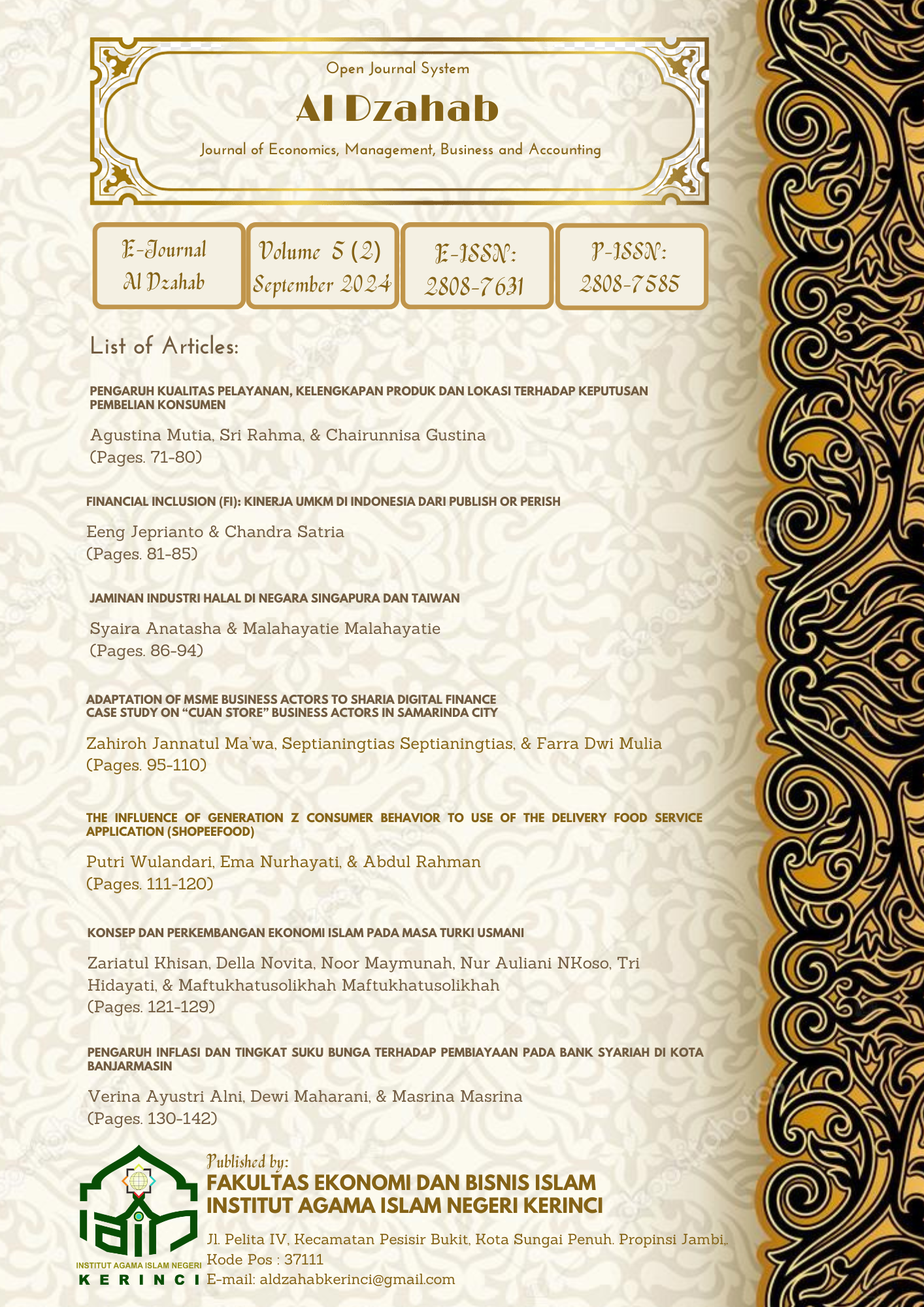
E-Journal Al-Dzahab
Vol. 05, Issue 02
September, 2024
Pages. 152-162
p-ISSN: 2808-7631
e-ISSN: 2808-758
Findings: The findings reveal that Muslim perceptions of taxation are shaped by the interaction of religious values, administrative experiences, fiscal literacy, and trust in government institutions. Taxation is conceptualized within three primary frameworks: as a financial burden, as an administrative obligation, and as a form of social contribution to public welfare. The main distinction between tax and zakat lies in normative legitimacy and spiritual dimension. Zakat is perceived as a religious obligation with eschatological implications, whereas taxation is understood as an institutional obligation within the modern state system. Nevertheless, most informants accept taxation as long as it is implemented based on the principles of justice, transparency, and public benefit in line with the objectives of maqāṣid al-sharī‘ah.
Research Implications: These findings highlight the importance of strengthening both the moral and institutional legitimacy of fiscal policy. Enhancing value-based fiscal literacy and fostering collaboration between government institutions and religious authorities are essential to reinforce tax morale and encourage voluntary tax compliance among Muslim communities.
References
Abidin, A., & Utami, P. (2020). the Regulation of Zakat Digital Technology in Creating Community Welfare Impact on Economic Development. Journal of Legal, Ethical and Regulatory Issues, 23(5), 1–9.
Azizul, G. (2024). RELIGIUSITAS PEKERJA SEKS KOMERSIAL (Studi Lokalisasi Pemandangan Kecamatan Panjang Kota Bandar Lampung). UIN Raden Intan Lampung.
Azwar, A., & Mulyawan, A. W. (2026). Kebijakan Fiskal dalam Perspektif Islam: Rekonstruksi Konseptual, Instrumen Syariah, dan Relevansinya terhadap Ekonomi Kontemporer dan Industri Halal: Fiscal Policy in Islamic Perspective: Conceptual Reconstruction, Sharia Instruments, and Their Relevance to Contemporary Economy and Halal Industry. TIJARAH: Jurnal Ekonomi, Manajemen, Dan Bisnis Syariah, 3(1), 65–87.
Budiman, M. A., MEI, P. D., CIRR, C., Yulia Hafizah, S. H. I., Alfisyah, S. A., Darussalam, S. E., Casnadi, L., Sukarni, M. A., Al Hadi, M. Q., & SHI, M. E. (2024). Pajak dan Syariat Islam: Tinjauan Historis dan Sosiokultural. PT. RajaGrafindo Persada-Rajawali Pers.
Chapra, M. U. (2021). The Islamic vision of development in the light of maqasid al-shariah. Islamic Research and Training Institute.
Darmayasa, I. N. (2022). Perwujudan Amnesti Pajak Humanistik Religius Berkeadilan. Penerbit Peneleh.
Development, O. for E. C. and. (2023). Revenue Statistics 2023. OECD Publishing.
Dian, S. W. (2024). Analisis Pengaruh Pendapatan Negara Dan Belanja Negara Terhadap Penerimaan Pajak Di Indonesia Tahun 2001-2023 Dalam Perspektif Ekonomi Islam. UIN Raden Intan Lampung.
Hassan, M. K., & Aliyu, S. (2018). A contemporary survey of Islamic banking literature. Journal of Financial Stability, 34, 12–43. https://doi.org/10.1016/j.jfs.2017.11.006
Herman, L. A., Dewi, A. S., & Dewi, M. K. (2019). Perilaku kepatuhan wajib pajak yang dipersepsikan melalui faktor deterrence, Keadilan dan norma sosial. Jurnal Benefita: Ekonomi Pembangunan, Manajemen Bisnis & Akuntansi, 4(1), 146–161.
Izza, I. A. N., & Hamzah, A. (2009). Etika Penggelapan Pajak Perspektif Agama: Sebuah Studi Interpretatif. Simposium Nasional Akuntansi XII, 1–26.
Judijanto, L. (2024). Persepsi masyarakat terhadap kewajiban perpajakan. Jurnal Akuntansi, Keuangan, Perpajakan Dan Tata Kelola Perusahaan, 1(4), 499–514.
Marwah, S. (2023). Analisis interaksi pembiayaan perbankan syariah, perkembangan UMKM, dan pertumbuhan ekonomi daerah. UIN Syekh Ali Hasan Ahmad Addary Padangsidimpuan.
Noor, T. R., Inayati, I. N., & Bakri, M. (2021). Majelis Taklim Sebagai Transformator Pendidikan, Ekonomi Dan Sosial Budaya Pada Komunitas Muslimah Urban. Tarbiyatuna: Jurnal Pendidikan Islam, 14(1), 1–19.
Noprianto, E., & Rahayu, S. (2020). Faktor-Faktor yang Mempengaruhi Kecenderungan Fraud dalam Pengelolaan Keuangan di Desa Se-Kecamatan Pelepat Ilir Kabupaten Bungo. Jurnal Akuntansi & Keuangan Unja, 5(4), 258–267.
Primasari, N. H. (2023). Faktor Demografi Terhadap Perilaku Kepatuhan Wajib Pajak Dengan Norma Sosial Sebagai Variabel Intervening. Educoretax, 3(3), 192–205.
Sari, M. A. (2018). Faktor-Faktor Yang Mempengaruhi Kemauan Membayar Pajak Bagi Wajib Pajak Pribadi Yang Melakukan Pekerjaan Bebas Dalam Perspektif Ekonomi Islam (Studi Kasus Di Kantor Pelayanan Pajak Pratama Kedaton). UIN Raden Intan Lampung.
Siat, C. C., & Toly, A. A. (2013). Faktor-Faktor yang Mempengaruhi Kepatuhan Wajib Pajak dalam Memenuhi Kewajiban Membayar Pajak di Surabaya. Tax & Accounting Review, 1(1), 41.
Utami, P., Suryanto, T., Ghofur, R. A., & Nasor, M. (2020). Refleksi Hukum Zakat Digital Pada BAZNAS dalam Rangka Peningkatan Kesejahteraan Mustahik. Jurnal Surya Kencana Satu : Dinamika Masalah Hukum Dan Keadilan, 11(1), 53–70.
Utami, P., Suryanto, T., Nasor, M., & Ghofur, R. A. (2020). The Effect Digitalization Zakat Payment Against Potential of Zakat Acceptance in National Amil Zakat Agency. Iqtishadia, 13(2), 216. https://doi.org/10.21043/iqtishadia.v13i2.7809.
Downloads
Published
Issue
Section
License
Copyright (c) 2024 Bambang Suryanto, Hosnie Siraj Saifoden, Umi Khulsum

This work is licensed under a Creative Commons Attribution 4.0 International License.