Revealing the Numeracy Skills of Eighth-Grade Students in Solving PISA 2022 Quantity Content Problem
DOI:
https://doi.org/10.32939/ejrpm.v8i2.6153Keywords:
Junior High School Students, Numeracy Skills, PISA 2022 Task, Quantity ContentAbstract
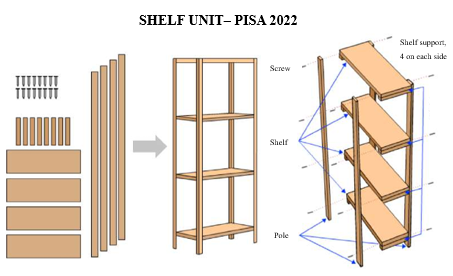
This study is qualitative descriptive research that aims to describe eighth-grade students’ numeracy skills in solving a PISA 2022 quantity content problem. This focus is important because PISA-type tasks require reasoning, quantitative interpretation, and decision-making skills that are essential for students’ mathematical literacy in real-life situations. Thirty-two eighth-grade students of a junior high school in Jambi, Indonesia, participated in this study. Data were collected through a written test adapted from the PISA 2022 released items and follow-up interviews with selected students. The results showed that most students demonstrated low numeracy performance, particularly in interpreting information, performing multi-step calculations, and drawing correct conclusions. Only a small number of students were able to meet the expected indicators of numeracy skills. These findings indicate that students have not yet fully met the cognitive demands of PISA quantity tasks. The results highlight the need for instruction that provides more opportunities for students to practice contextual quantitative reasoning. For classroom practice, teachers are encouraged to incorporate multi-step contextual tasks that gradually strengthen students’ interpretation, strategy selection, and reasoning abilities. The findings also serve as a basis for further research on developing PISA-type jumping tasks adapted to relevant local contexts to support students’ numeracy skills.
Downloads
References
Apriliyani, Z., Istihapsari, V., & Istiandaru, A. (2022). Analisis kemampuan berpikir kreatif matematis siswa SMP ditinjau dari kemandirian belajar. Jurnal Riset Pendidikan Dan Inovasi Pembelajaran Matematika (JRPIPM), 6(1), 58–77. https://doi.org/10.26740/jrpipm.v6n1.p58-77
Aquino, A. S., & Ibarra, F. P. (2024). Correlational analysis on mathematical disposition and mathematical achievement among selected senior high school students at San Jose City National High School. Journal of Higher Education Theory and Practice, 24(11), 113–132. https://doi.org/10.33423/jhetp.v24i11.7413
Cayetano, H., & Ibarra, F. P. (2024). Projecting learning styles and metacognitive awareness as predictors of problem-solving abilities in mathematics among elementary pre-service teachers. Journal of Higher Education Theory and Practice, 24(12), 8–26. https://doi.org/10.33423/jhetp.v24i12.7462
De Bortoli, L., & Underwood, C. (2025). PISA 2022. A closer look at mathematics in Australia. https://doi.org/10.37517/978-1-74286-786-1
Efendi, R., Kismiantini, & Krisnamurti, A. W. (2024). Analysis of PISA 2018 results in Indonesia: Perspective of ICT resources, books, grade repetition and school background. AIP Conference Proceedings, 2622(1), 80014. https://doi.org/10.1063/5.0133360
Fadlila, N., Wijaya, A., & Hilmi, I. (2022). Quantity content: Developing mathematics PISA-like problems with independence day contest context. JTAM (Jurnal Teori Dan Aplikasi Matematika), 6(2), 425. https://doi.org/10.31764/jtam.v6i2.7475
Geiger, V., & Schmid, M. (2022). A critical turn in numeracy education and practice. Frontiers in Education, 2011. https://doi.org/10.3389/feduc.2024.1363566
Han, W., Susanto, D., Dewayani, S., Pandora, P., Hanifah, N., Miftahussururi, Nento, M. N., & Akbari, Q. S. (2017). Materi Pendukung Literasi Numerasi. Kemdikbud.
Juhaevah, F. (2022). Developing mathematics problems using local wisdom context of Maluku to improve students’ numeracy. Jurnal Elemen, 8(1), 323–339. https://doi.org/10.29408/jel.v8i1.4524
Kandaga, T. (2024). Pemahaman konsep matematika siswa MTs dalam model discovery learning berbantuan aplikasi quizizz. Kognitif: Jurnal Riset HOTS Pendidikan Matematika, 4(1), 57–67. https://doi.org/10.51574/kognitif.v4i1.1221
Kemendikdasmen. (2024). Tes Kemampuan Akademik (TKA). Pusat Asesmen Pendidikan, Kemendikbudristek. https://pusmendik.kemendikdasmen.go.id/tka/
Machromah, I. U., Harun, S., Prayitno, J., Faiziyah, N., & Sri Fatmasari, L. W. (2020). Designing PISA-like mathematics task to assess students’ mathematical literacy. Universal Journal of Educational Research, 8(10), 4986–4995. https://doi.org/10.13189/ujer.2020.081072
Miles, M. B., & Huberman, A. M. (1994). Qualitative and Data Analysis. SAGE Publications.
Myrela, A. C., & Khuzaini, N. (2024). Analisis kemampuan siswa kelas xi dalam menyelesaikan soal literasi numerasi materi turunan. Pedagogy: Jurnal Pendidikan Matematika, 10(2), 132–143. https://doi.org/10.47662/pedagogi.v10i2.749
Nurhayati, N., Asrin, A., & Dewi, N. K. (2022). Analisis kemampuan numerasi siswa kelas tinggi dalam penyelesaian soal pada materi geometri di SDN 1 Teniga. Jurnal Ilmiah Profesi Pendidikan, 7(2b), 723–731. https://doi.org/10.29303/jipp.v7i2b.678
Nusantara, D. S., Zulkardi, Z., & Putri, R. I. I. (2021a). Designing PISA-like mathematics problem using a COVID-19 transmission map context. AIP Conference Proceedings, 2438(1), 020005. https://doi.org/10.1063/5.0071596
Nusantara, D. S., Zulkardi, Z., & Putri, R. I. I. (2021b). Designing PISA-like mathematics task using a COVID-19 context (Pisacomat). Journal on Mathematics Education, 12(2), 349–364. https://doi.org/10.22342/jme.12.2.13181.349-364
Nusantara, D. S., Zulkardi, Z., & Putri, R. I. I. (2024). Students’ strategies in solving PISA-like mathematics problems on change and relationship content. AIP Conference Proceedings, 020043. https://doi.org/10.1063/5.0201003
Nusantara, D. S., Zulkardi, Z., & Putri, R. I. I. (2025). Investigating Students’ Mathematical Argumentation Ability in Solving PISA-like Mathematics Tasks on Change and Relationships . Mathematics Education Journal, 19(4 SE-Articles), 807–826. https://jpm.ejournal.unsri.ac.id/index.php/jpm/article/view/504
OECD. (2016). PISA 2015 Results (Volume I): Excellence and Equity in Education. OECD Publishing. https://doi.org/10.1787/9789264266490-en
OECD. (2019). PISA 2018 Results (Volume I): What Students Know and Can Do. OECD Publishing. https://doi.org/10.1787/5f07c754-en
OECD. (2023). PISA 2022 Results (Volume I): The State of Learning and Equity in Education (PISA). OECD. https://doi.org/10.1787/53f23881-en
Rhamayanti, Y., Siregar, R. N., Khomeni, A., & Harahap, H. H. (2024). Pelatihan pembelajaran kolaboratif jumping task berbasis bahasa matematis tapsel untuk meningkatkan kompetensi 6C abad 21 siswa SD Negeri 100601 Pintu Padang. KOMUNITA: Jurnal Pengabdian Dan Pemberdayaan Masyarakat, 3(2), 252–267. https://doi.org/10.60004/komunita.v3i2.108
Rizal, Y. A., Zubainur, C. M., & Yusrizal. (2021). The validity of PISA equivalent mathematical problems based on content quantity. AIP Conference Proceedings, 2331(1), 20022. https://doi.org/10.1063/5.0045498
Santos, R. A., Collantes, L. M., Ibañez, E. D., Ibarra, F. P., & Pentang, J. T. (2022). Innate mathematical characteristics and number sense competencies of junior high school students. International Journal of Learning, Teaching and Educational Research, 21(10), 325–340. https://doi.org/10.26803/ijlter.21.10.18
Shafa, S., Zulkardi, Z., & Putri, R. I. I. (2023). Students’ creative thinking skills in solving PISA-like mathematics problems related to quantity content. Jurnal Elemen, 9(1), 271–282. https://doi.org/10.29408/jel.v9i1.6975
Stacey, K. (2010). Mathematics teaching and learning to reach beyond the basics. https://consensus.app/papers/mathematics-teaching-and-learning-to-reach-beyond-the-stacey/f1e787639c9c52dab5711ba12ea1822a/
Stacey, K., & Turner, R. (2014). Assessing mathematical literacy : the PISA experiemce. https://consensus.app/papers/assessing-mathematical-literacy-the-pisa-experiemce-stacey-turner/26ef195035ba5f2fb7036d42049129fe/
Susanto, E., Susanta, A., & Rusdi, R. (2022). Pelatihan penyusunan instrumen tes matematika online berbasis PISA bagi guru matematika SMP Bengkulu. JPM: Jurnal Pengabdian Masyarakat, 2(3), 114–120. https://doi.org/10.47065/jpm.v2i3.330
Tanjung, A. L., Zulkardi, Z., & Putri, R. I. I. (2023). The development of PISA-like problems using immunity context during pandemic. Jurnal Elemen, 9(1), 31–48. https://doi.org/10.29408/jel.v9i1.6152
Utami, M. R. P., Zulkardi, & Putri, R. I. I. (2024). Student’s critical thinking skills in solving PISA-like mathematics questions on quantity content. AIP Conference Proceedings, 3052(1), 20024. https://doi.org/10.1063/5.0201029
Zulkardi, Nusantara, D. S., & Putri, R. I. I. (2021). Designing PISA-like task on uncertainty and data using Covid-19 context. Journal of Physics: Conference Series, 1722(1). https://doi.org/10.1088/1742-6596/1722/1/012102
Downloads
Published
Issue
Section
License
Copyright (c) 2025 Jihan Adi Pradypta, Duano Sapta Nusantara, Ranisa Junita, Florante P Ibarra

This work is licensed under a Creative Commons Attribution 4.0 International License.