The Effect of Problem-Based Learning on Junior High School Students’ Mathematical Problem-Solving Ability: A Meta-Analysis
DOI:
https://doi.org/10.32939/ejrpm.v9i1.6823Keywords:
Effect Size, Secondary School Students, Mathematical Problem-Solving, Meta-Analysis, Problem Based LearningAbstract
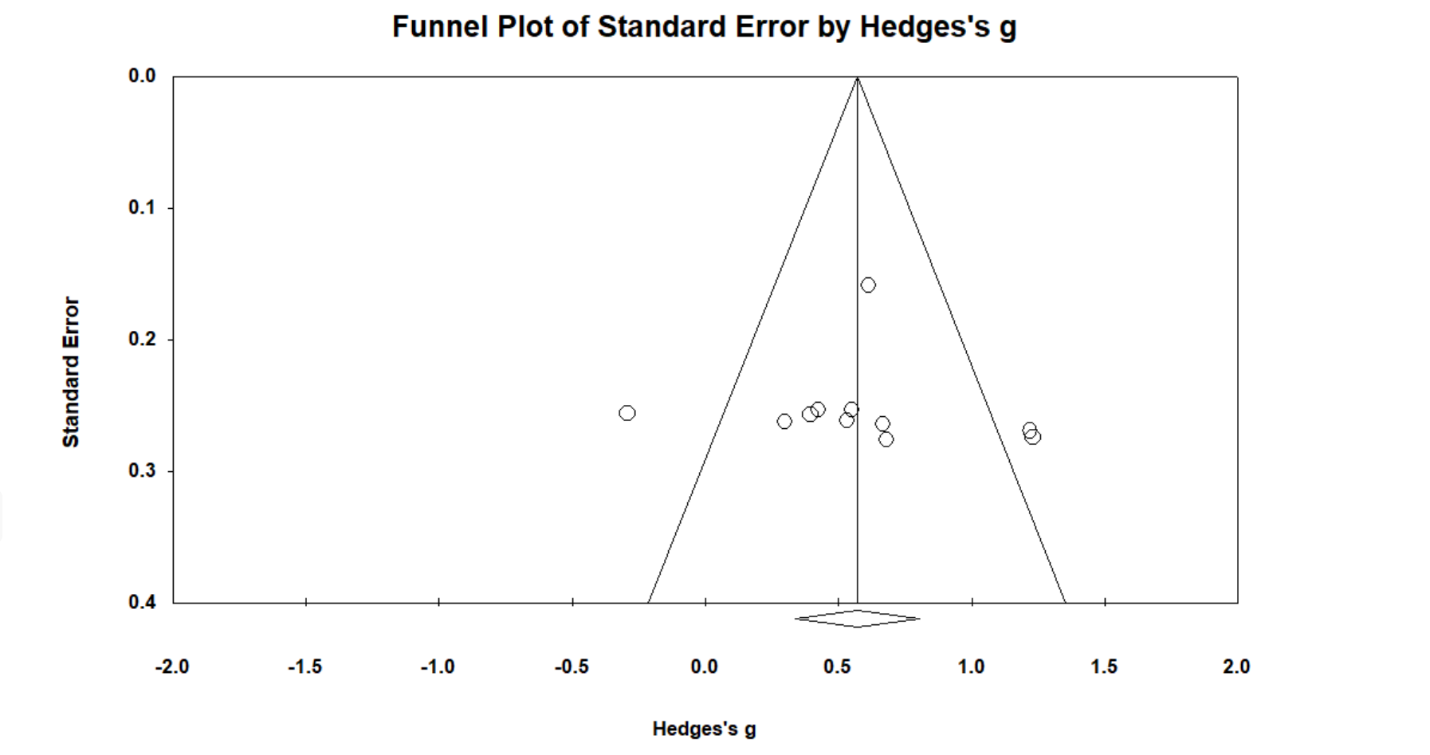
Background: Mathematical problem-solving ability remains a major challenge among junior high school students, while empirical studies on the effectiveness of Problem-Based Learning (PBL) have reported inconsistent findings. Purpose: This study aims to synthesize evidence of PBL effectiveness on junior high school students’ mathematical problem-solving ability. Method: Through meta-analysis following PRISMA procedures, 14 eligible studies published between 2016 and 2025 were identified, while 11 studies used for further analysis. Comprehensive Meta-Analysis (CMA) software was used to determine effect sizes, heterogeneity, publication bias, and moderator variables. Findings: The results showed that PBL has a medium effect size (g = 0.569; p < 0.001) with stronger effect in Grade VIII, topics requiring HOTS, and during the COVID-19 studies. Heterogeneity was moderate, while publication bias and sensitivity tests confirmed results’ robustness. Implications: These findings support the use of PBL in mathematics learning to enhance students’ mathematical problem-solving ability across diverse classroom settings. Originality: This study contributes a quantitative synthesis of PBL effectiveness and highlights factors influencing its impact on mathematical problem-solving ability.
Downloads
References
Not yet avaliable.
Published
Issue
Section
License
Copyright (c) 2026 Luluk Murniati, Muhammad Fachri B Paloloang, Baharuddin Baharuddin, Mubarik Mubarik

This work is licensed under a Creative Commons Attribution 4.0 International License.